
Prof. Nesti Sianipar Shares Roadmap for Sustainable Plant-Based Innovations at IPSBI National Webinar
22 May 2026
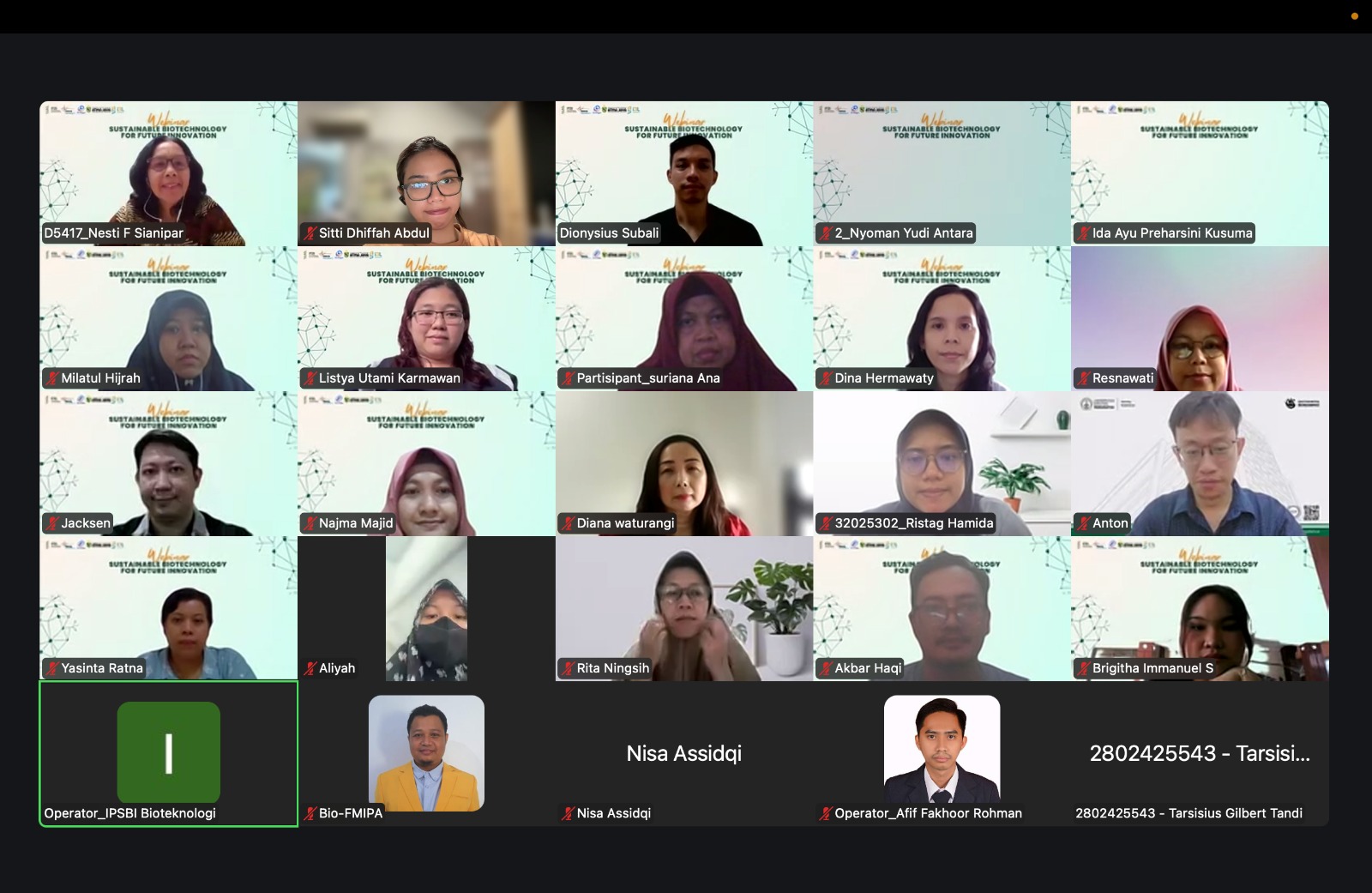
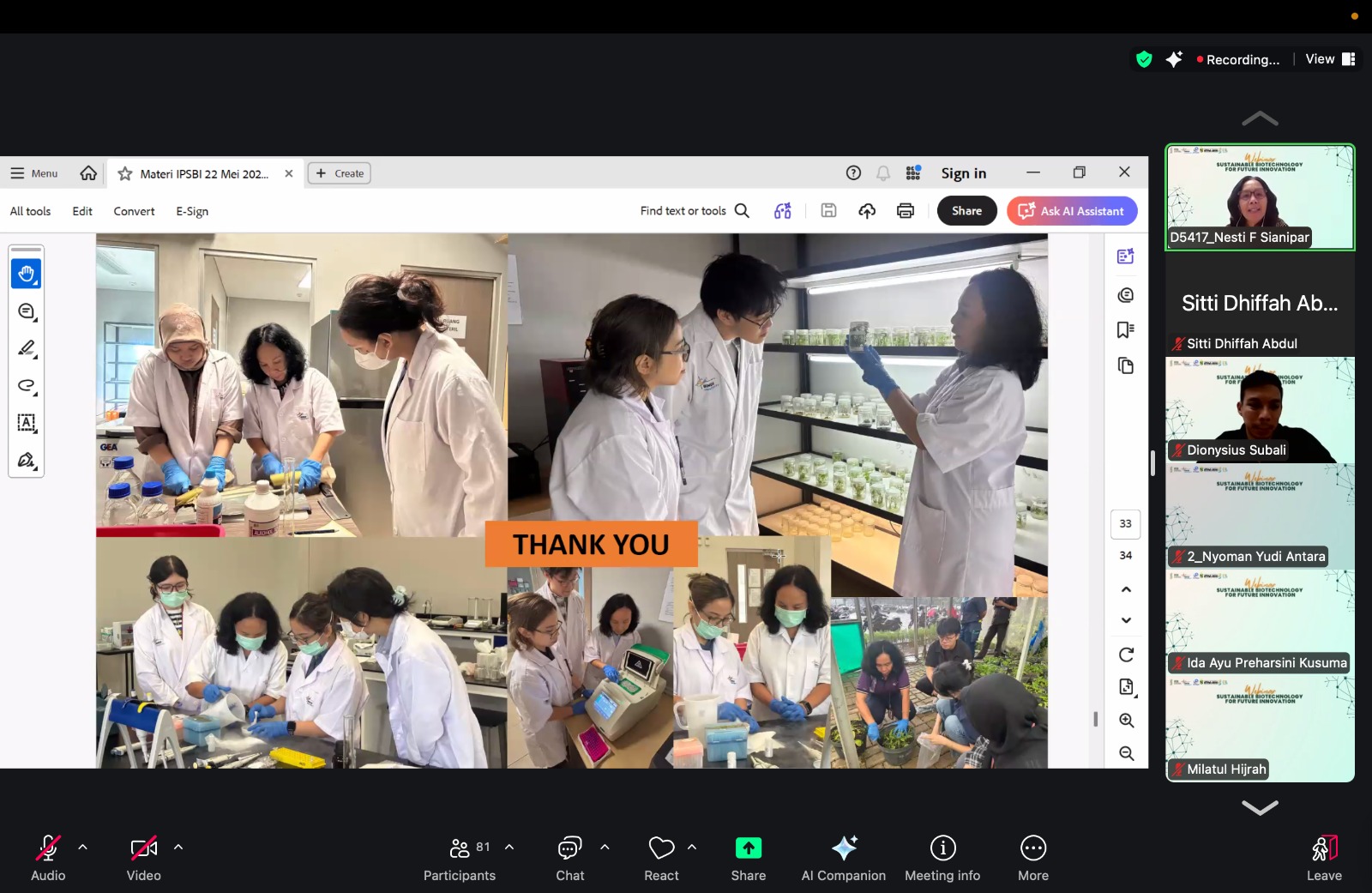
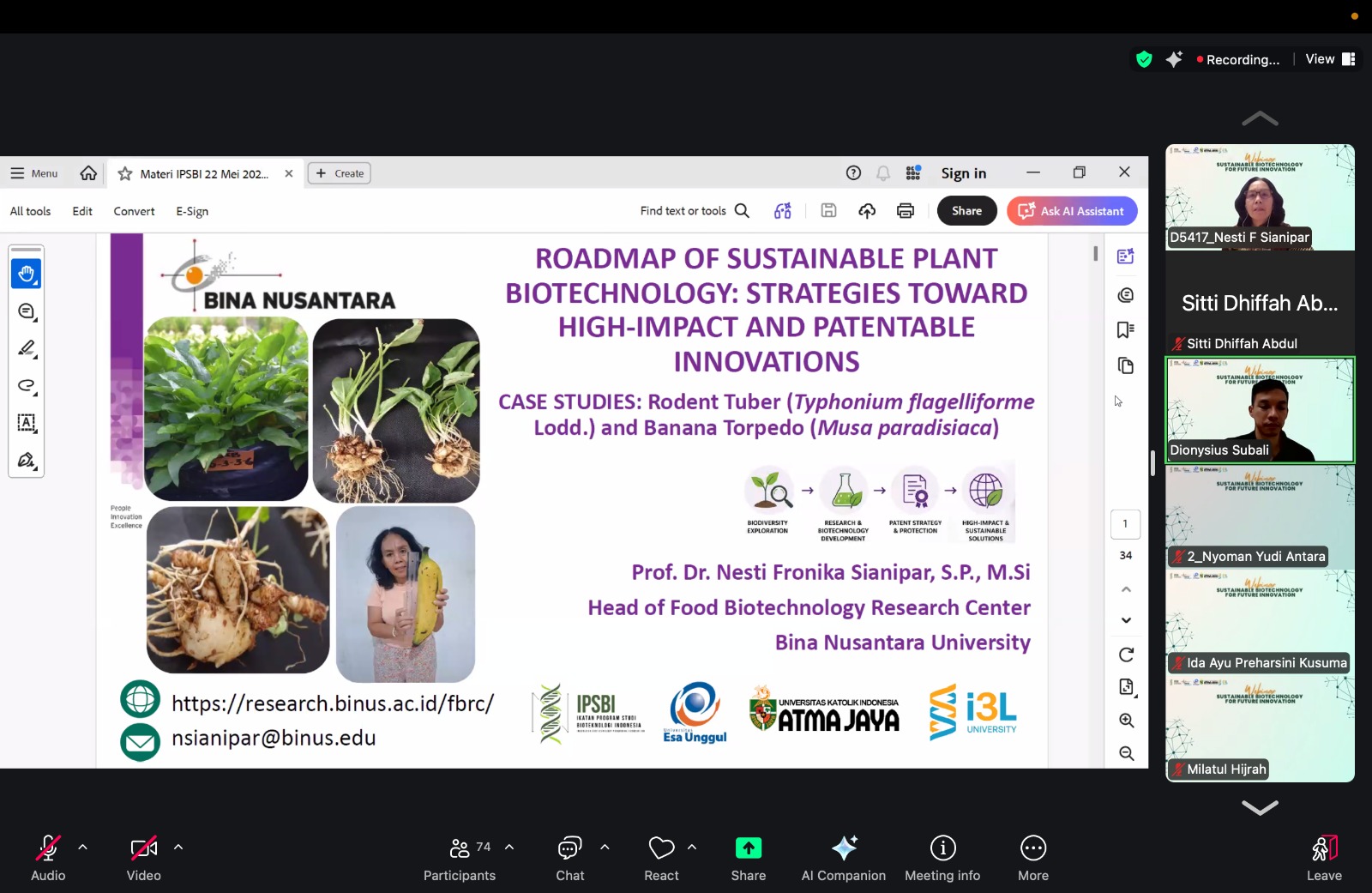
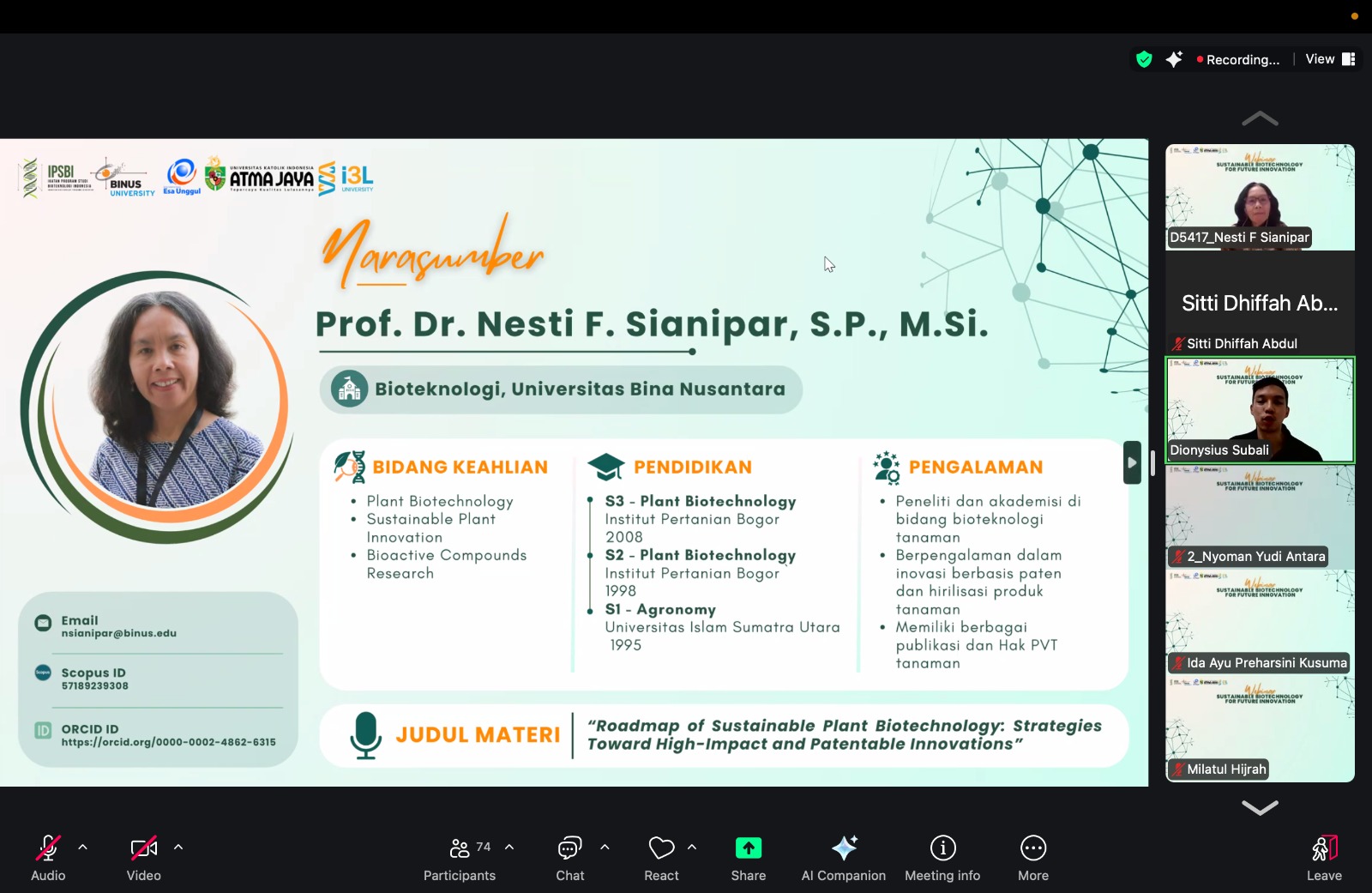
Prof. Nesti Sianipar, Head of the Food Biotechnology Research Center, was invited as a keynote speaker at the Indonesian Biotechnology Study Program Association (IPSBI) National Webinar entitled “Sustainable Biotechnology for Future Innovation” on 22 May 2026.
During the webinar, Prof. Sianipar delivered a presentation on the roadmap of sustainable plant-based strategies toward high-impact and patentable innovations, highlighting how biotechnology research can transform Indonesia’s rich plant biodiversity into products with tangible benefits for society and industry.
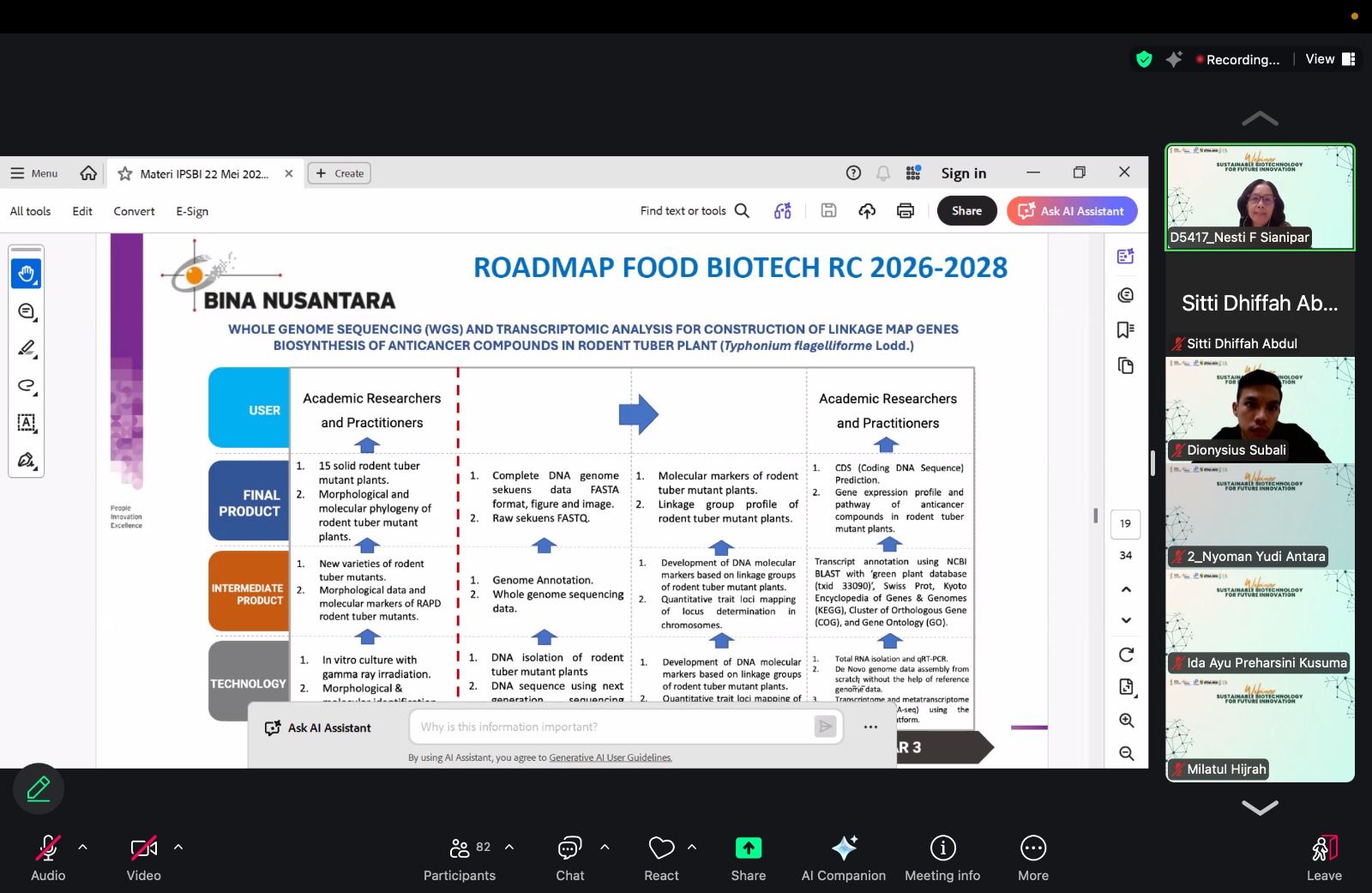
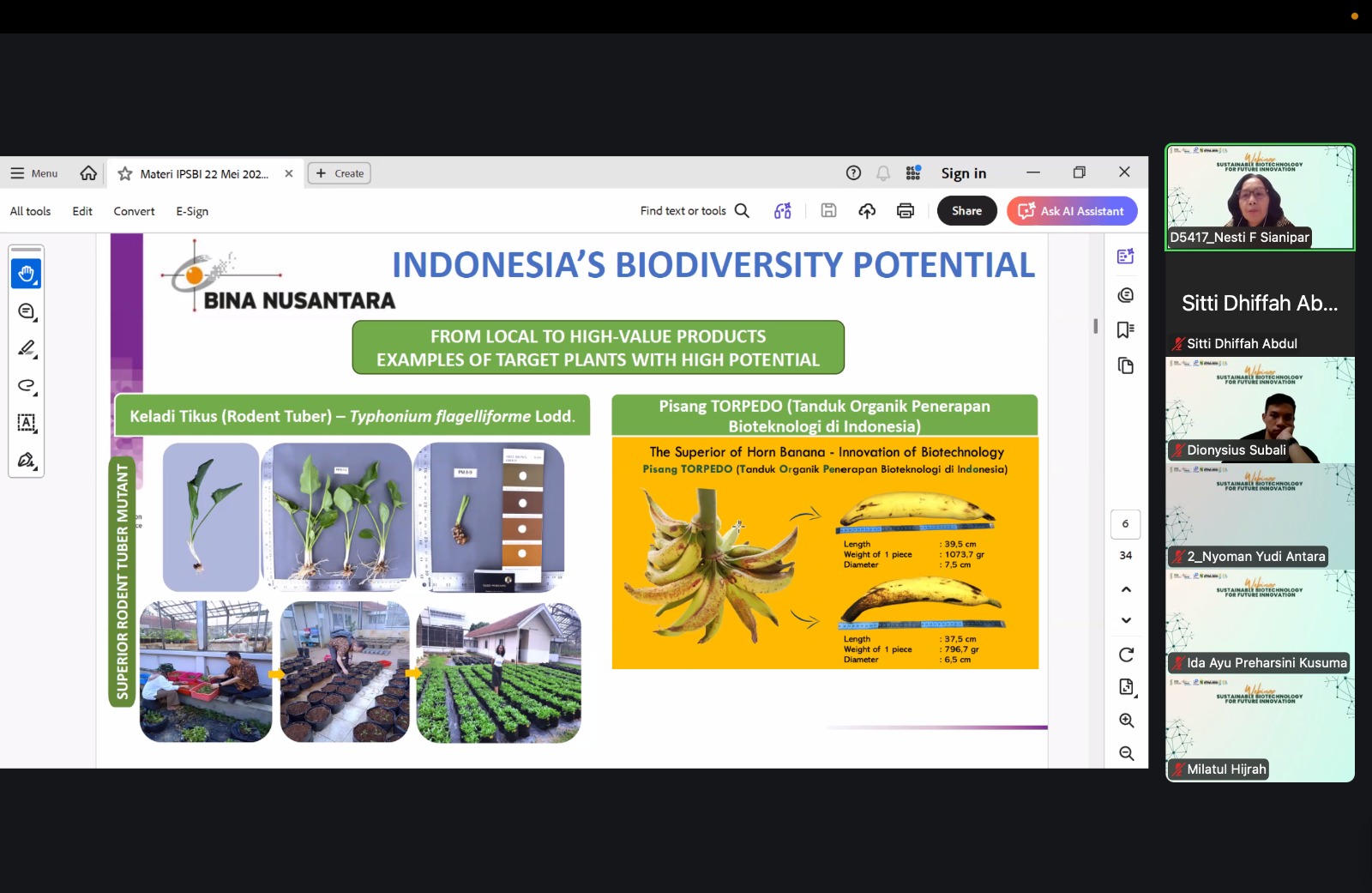
Drawing on years of research and innovation, Prof. Sianipar presented two notable case studies: Typhonium flagelliforme (keladi tikus) and torpedo banana. She explained how systematic research, product development, and intellectual property protection have contributed to the advancement of these indigenous plant resources into innovations with commercial and societal potential.
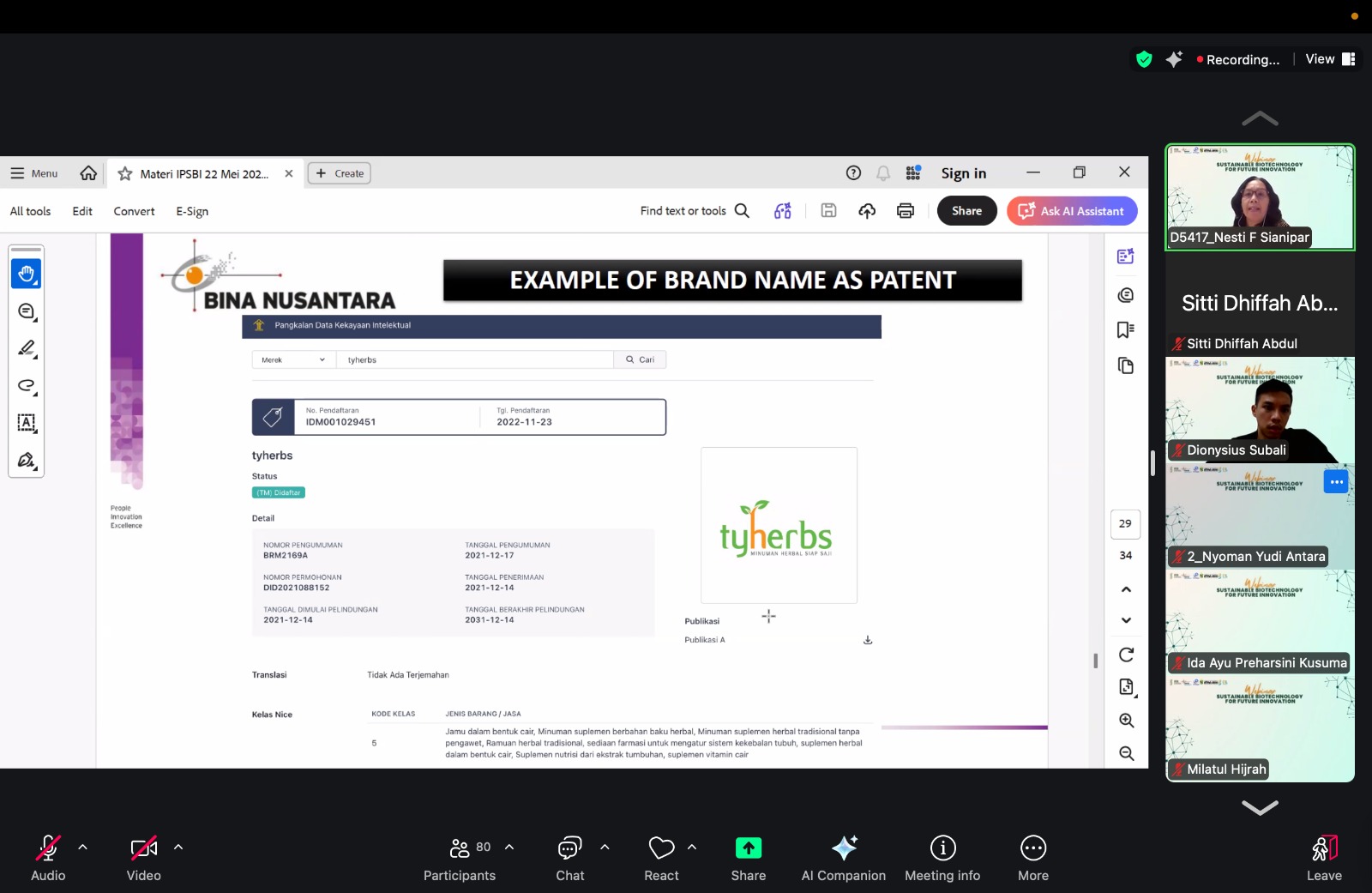
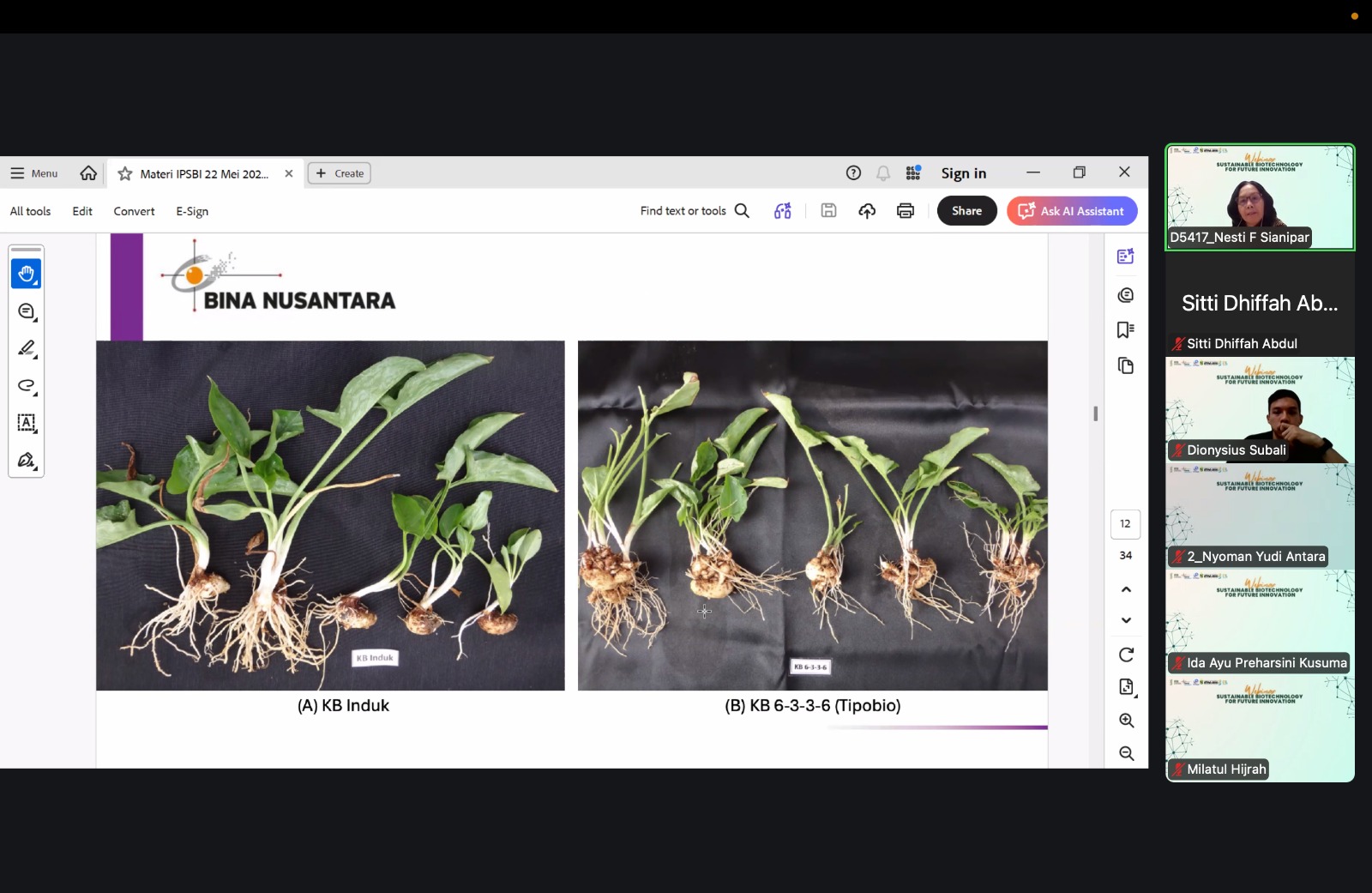
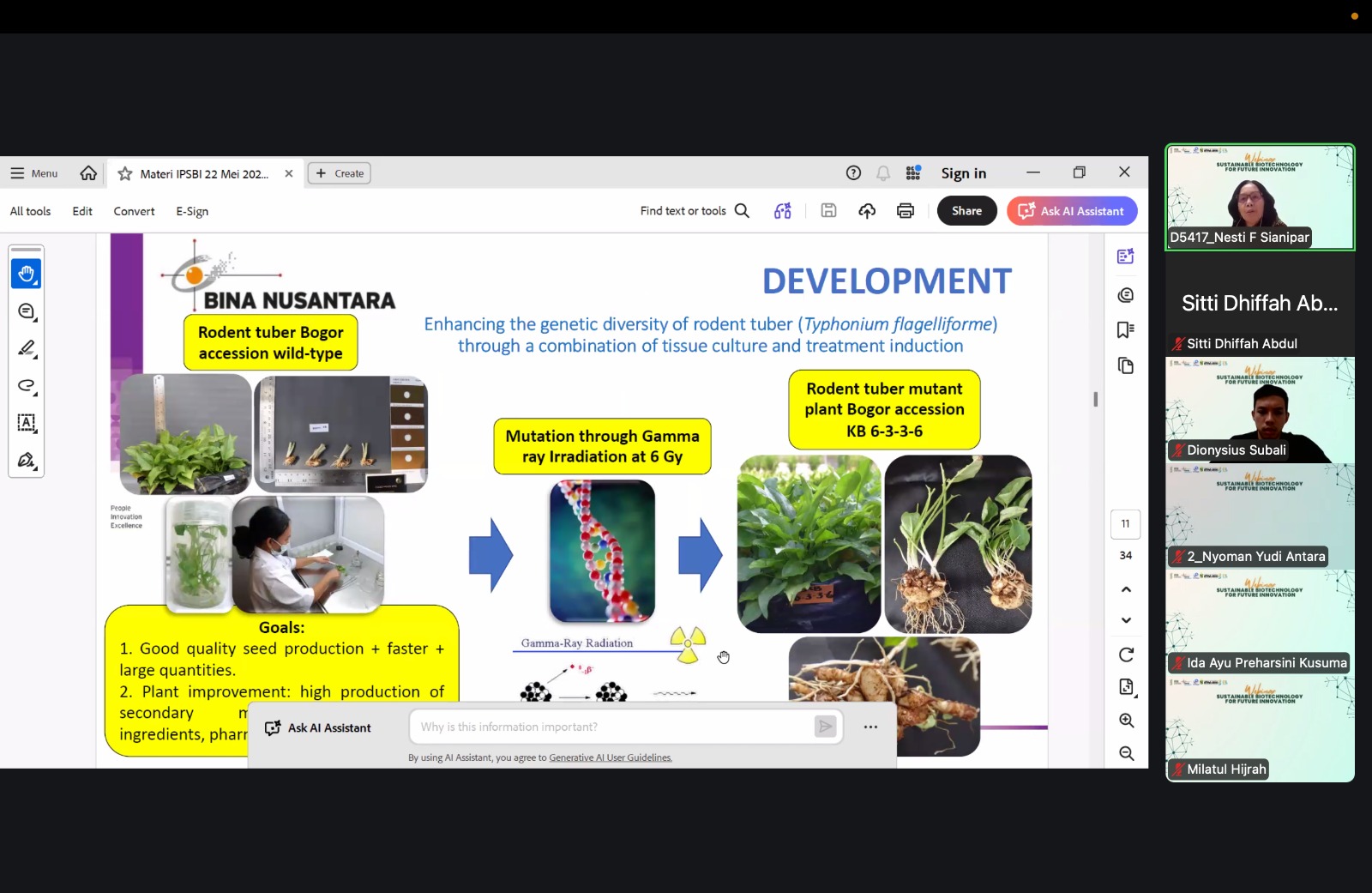
For rodent tuber (Typhonium flagelliforme), Prof. Sianipar discussed its development as a source of functional health products, including formulations designed to maximize the plant’s bioactive compounds. She emphasized the importance of integrating scientific validation, product formulation, and patent protection to ensure that research outputs can generate real-world impact.
In addition, Prof. Sianipar highlighted the innovation potential of torpedo banana, an underutilized local genetic resource with promising applications for food diversification and value-added product development. Through biotechnology-driven research and strategic innovation pathways, this local commodity demonstrates how Indonesia’s biodiversity can be transformed into competitive and sustainable products.
Throughout the session, Prof. Sianipar underscored the importance of building a strong innovation ecosystem that connects research institutions, industry partners, and policymakers. She encouraged researchers and students to pursue research that not only contributes to scientific knowledge but also addresses societal needs and creates opportunities for intellectual property generation.
Her presentation provided participants with valuable insights into how sustainable biotechnology can serve as a catalyst for innovation, economic development, and the utilization of Indonesia’s unique biological resources. The session also inspired young researchers to explore pathways for translating scientific discoveries into impactful and patentable technologies.
Comments :